
Last updated November 16, 2026
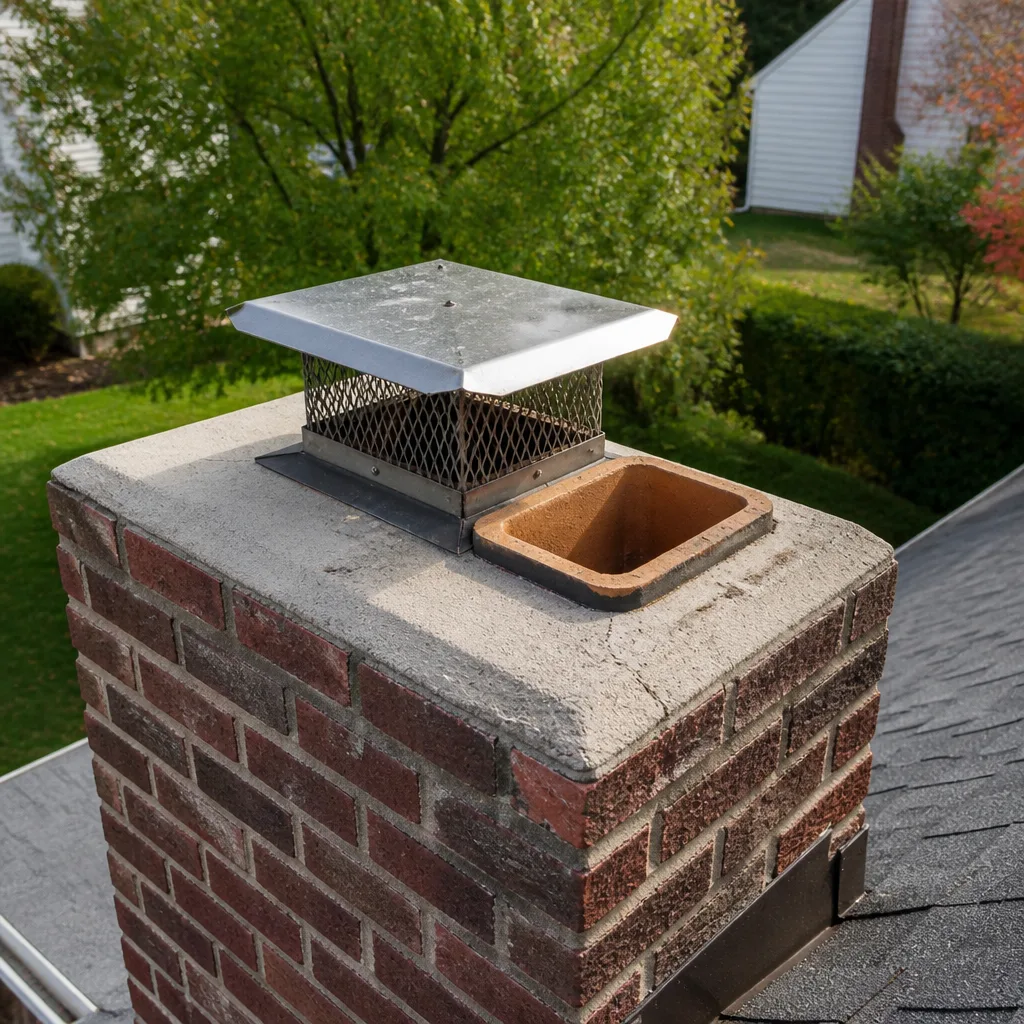 Sweep & inspection
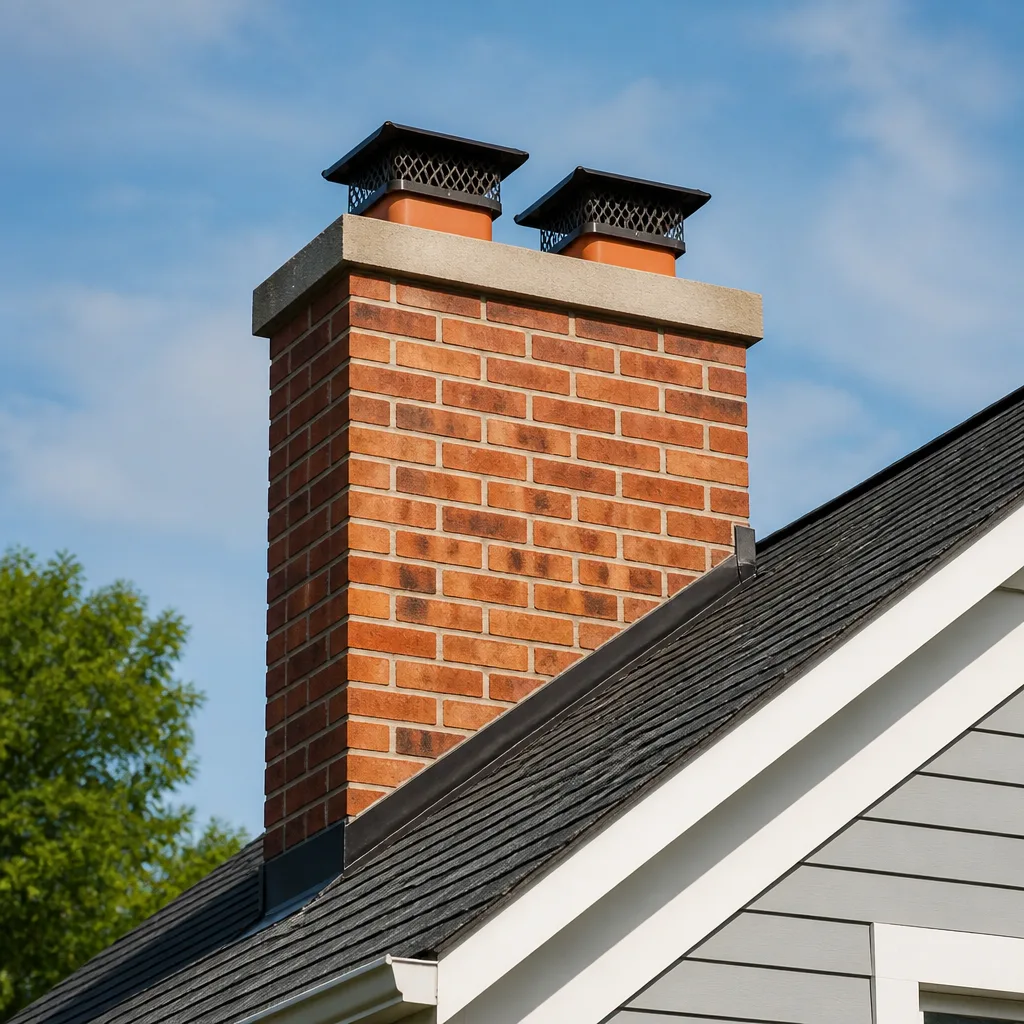 Caps & crowns
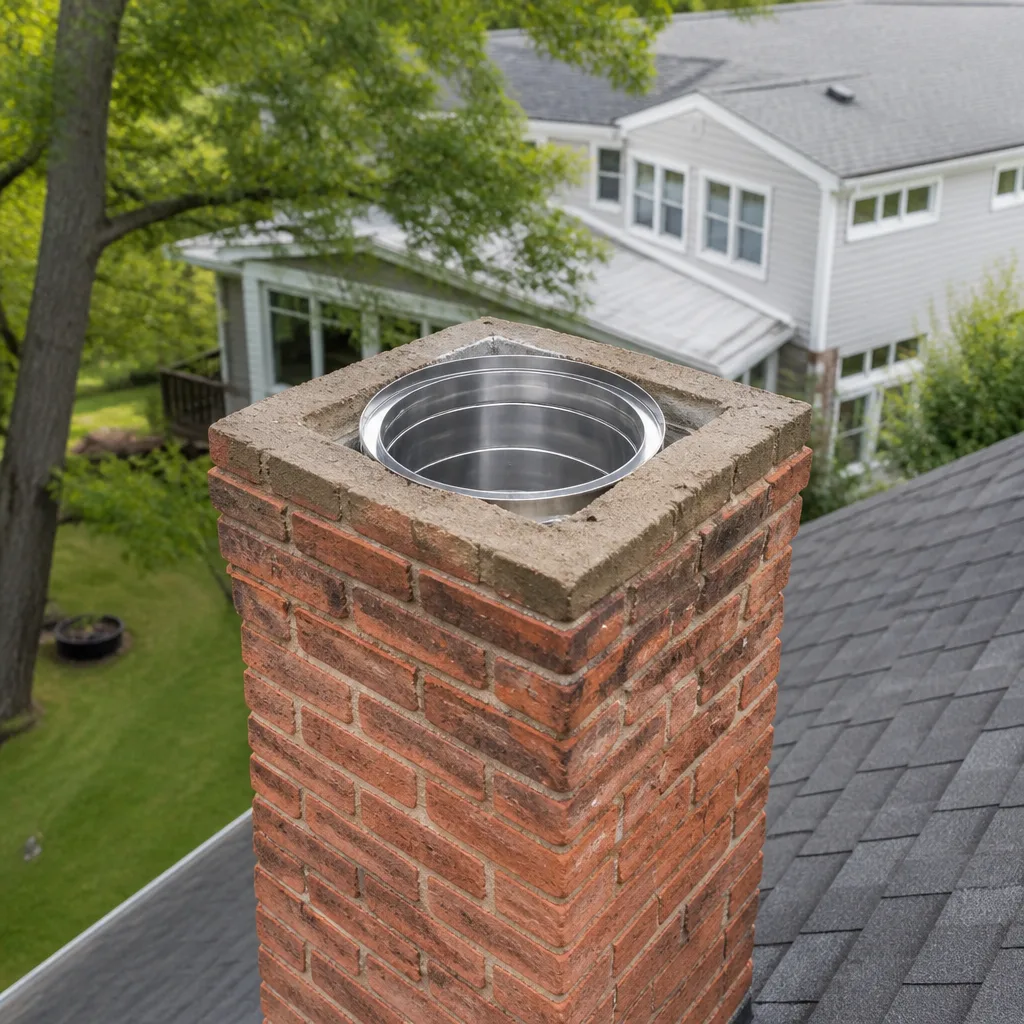 Flue relining
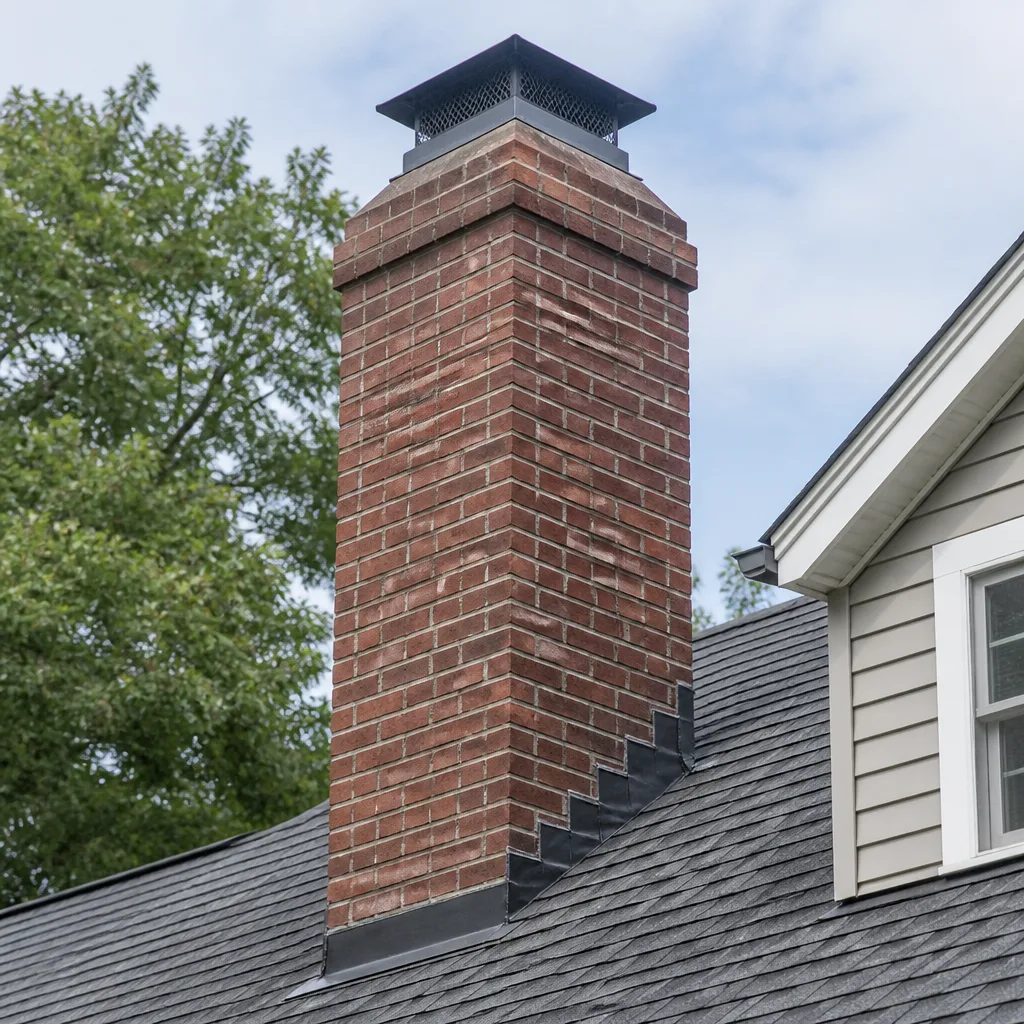 Masonry repair
 Gas fireplace service
Level 1 sweep and inspection to the NFPA 211 annual standard - flue, crown, cap, and flashing checked and photographed
Chimney sweep logs do not sweep chimneys. They loosen some creosote - which then falls where a brush and vacuum still have to collect it.
Chimney Sweep Troubleshooting in Aurora: Common Problems and How to Fix Them
If smoke is backing into your living room, the instinct is to open a window. That works for about a minute, and then you’re back where you started, only colder. Here’s the part most people get wrong: a window masking the smoke also masks the symptom, and that symptom could point to five completely different root causes in your flue, firebox, or termination. Each one has its own fix, its own price, and its own urgency. This guide walks Aurora homeowners through a system-by-system way of thinking about chimney trouble: what each sign means, how to tell a cleaning issue from a liner issue from a cap or crown issue, and what to ask for so the next person who looks at your chimney has a baseline. We’ll also cover why Aurora’s elevation changes how your fireplace draws, a factor most national guides skip entirely.
Quick Answer
Most chimney problems in Aurora trace back to one of four things: a blocked or glazed flue that needs sweeping, a deteriorated liner that needs resurfacing or relining, a failed cap or crown letting water in, or draft trouble tied to combustion air at Aurora’s roughly 5,400-foot elevation. Diagnose the symptom first (smoke rollout, weak draft, odor, water staining), then match it to the system it points at. Get a documented inspection before agreeing to any repair, and ask plainly what can safely wait.
Styles & brands we work with
- Sweep & inspection
- Caps & crowns
- Flue relining
- Masonry repair
- Gas fireplace service
Table of Contents
- The symptom-to-cause matrix: what each sign actually points to
- Why Aurora’s elevation changes how your chimney draws
- Cleaning issue, liner issue, or cap and crown issue? How to tell before you call
- One-time fix or recurring problem: what repeat trouble signals
- Smoke rolling out of the firebox: working through the causes in order
- Water staining, rust, and odors: the moisture path through an Aurora chimney
- What documentation to ask for after any professional visit
- What to tell the sweep when you call, and what the visit should include
The Symptom-to-Cause Matrix: What Each Sign Actually Points To
Start by treating the chimney as a system with defined failure points rather than a mystery. Every chimney has a firebox, a smoke chamber, a flue with a liner, a crown, and a cap or termination. Trouble nearly always lands on one of those parts, and the symptom narrows down which. The matrix below is how we sort the first call.
- Smoke entering the room, especially on startup: usually a draft problem, a blocked flue, or a flue that’s too cold and too large for the fire. Less often, a termination issue at the top.
- Weak, lazy fire that won’t pull: draft again, but also check combustion air. In a tight modern house at Aurora’s elevation, a fireplace can starve for air.
- Strong smoky odor on warm days, no fire burning: often a negative-pressure situation pulling air down the flue, or creosote and soot residue in a flue that’s been sitting wet.
- Water staining on the ceiling, firebox walls, or damper: a cap, crown, or flashing failure letting moisture in. This is a weatherproofing problem, not a cleaning problem.
- Rust on the damper or firebox hardware: moisture has been getting in for a while. A cap issue that looked minor for two seasons shows up as rust.
- White, chalky staining on exterior masonry: water migrating through the brick and evaporating out. Crown and flashing are the first suspects.
- Debris, twigs, or a nest dropping into the firebox: a missing or damaged cap. This one is straightforward and worth fixing before it becomes a blockage.
If you can name the symptom, you’ve narrowed the failure point to two or three parts. That’s the whole point of the matrix: it turns “something’s wrong with the chimney” into a specific question the technician can confirm or rule out. A proper inspection confirms it with a camera and a condition report, not a guess from the living room floor.
Why Aurora’s Elevation Changes How Your Chimney Draws
Aurora sits at roughly 5,400 feet, and that matters more than most homeowners realize. Air is thinner up here, which means each cubic foot of it carries less oxygen. A fire needs a specific mass of oxygen to burn cleanly, so at elevation it needs a larger volume of air to get the same result. When the chimney can’t supply that volume, the fire burns sluggish and smoky, and draft suffers.
Here’s the second part. Chimneys rely on the temperature difference between hot flue gas and cooler outside air to create the pressure that pushes smoke up and out. Thinner air at elevation holds less heat and produces a weaker stack effect, so the same chimney that draws perfectly at sea level can feel marginal in Aurora. This isn’t a defect. It’s physics, and it’s the reason national guides written for low-altitude homes give advice that doesn’t always fit here.
What that means in practice:
- A firebox that’s oversized for the flue is a bigger liability at elevation, because the weak stack effect can’t keep up with a large fire.
- Combustion air matters more. In a well-sealed newer home, the fireplace can compete with the furnace and bath fans for the same air supply. Cracking a nearby window on startup isn’t a fix, but it’s a diagnostic: if the draft improves immediately, air supply is part of the problem.
- Cold-start smoke is normal to a degree. A cold flue has no stack effect yet. But if the smoke keeps rolling after the fire is established, that’s a real draft problem, not a startup quirk.
- Long flue runs and offset flues are less forgiving at Aurora’s elevation. A flue that runs up an exterior wall stays cold and draws poorly until it warms. Interior flues are easier.
None of this means your fireplace is broken. It means the diagnosis has to account for where you live. A technician who works at Aurora’s elevation every week knows the difference between a draft that’s simply weak and one that’s failing. When you call, mention your elevation concern directly, the way you would mention a specific symptom.
Cleaning Issue, Liner Issue, or Cap and Crown Issue? How to Tell Before You Call
Before you pick up the phone, you can usually sort your problem into one of three buckets. This saves time, sets expectations, and helps you ask the right questions. None of these checks involve climbing on the roof or reaching into the flue. Those are the parts a trained professional handles.
- Rule out the cleaning issue. Look up into the firebox with a flashlight. If you see heavy soot, flaky creosote, or obvious debris, and the last cleaning is more than a year behind you, a cleaning issue is the likely first suspect. A blocked or coated flue draws poorly and can smell on warm days. Sweeping is the fix, but it may not be the only issue.
- Look for the water path. Check the firebox walls, damper, and the ceiling of the firebox for staining, rust, or chalky residue. If you find them, you’re dealing with moisture, which points to the cap, crown, or flashing. Water doesn’t fix itself and compounds the longer it’s left. This is a cap or crown bucket, and a visual check at the top of the chimney confirms it.
- Test for the liner issue. If the fire draws fine, there’s no visible water, and the flue was swept recently, but you still get odor, smoke, or poor performance, a damaged or deteriorated liner becomes the suspect. A flue liner can crack, spall, or separate, and the symptoms overlap with draft problems. This one needs a camera inspection to confirm. It’s the bucket where you should not guess.
Why does the distinction matter? Because the three buckets carry very different fixes and very different price ranges. Sweeping is a maintenance cost. A cap or crown repair is a targeted weatherproofing job. A liner issue may call for resurfacing or relining, which is the most involved of the three. Knowing which bucket you’re likely in keeps you from paying for a big repair when you needed a sweep, and it keeps you from dismissing a liner problem as “just draft.”
There’s a fourth, softer bucket: performance quirks that are neither a fault nor a fault yet, like a fire that’s simply sluggish at Aurora’s elevation with a cold exterior flue. Those are the calls where a documented inspection tells you whether to adjust how you burn or plan for a repair. The clearance to look for in all of this is simple: an honest diagnosis tells you which bucket you’re in before anything is booked.
One-Time Fix or Recurring Problem: What Repeat Trouble Signals
There’s a big difference between a problem that shows up once and a problem that keeps coming back. A one-time fix is a single event with a single cause: a bird builds a nest, a wet fall drives water past a tired cap, a heavy burning season leaves more creosote than usual. You clean it up, correct the cause, and move on. A recurring problem is different. Repeat trouble of the same kind, in the same place, across seasons and across cleanings, is the signal that something structural is off.
What recurring problems typically point to:
- Repeated smoke rollout, season after season: in our experience, this most often traces to a flue that’s mismatched to the firebox or a liner that’s deteriorated and no longer smooth. Sweeping helps for a while, then the problem returns, because the cause wasn’t the soot. It was the flue.
- Regular dampness or staining that comes back after a cap repair: if a cap fix didn’t hold, the moisture path is usually broader than the cap alone. Crown cracking or flashing separation is the next thing to check. A one-time cap fix on a crown that’s already failing will look like a recurring problem.
- Odor that returns every warm season: a sign that residue is sitting in a flue that gets damp. If a sweep clears it but it comes back next spring, the flue itself may be holding moisture from a liner or crown problem.
- A fire that used to draw well and doesn’t anymore: gradual decline is often liner deterioration or a flue obstruction that’s building. It rarely resolves on its own.
Recurring problems are the strongest argument for a documented inspection rather than a sweep-and-go. A sweep clears the symptom. An inspection identifies the pattern. If the same symptom has come back twice, that’s your cue to ask for a full condition report with camera evidence, not another cleaning. When we do this work, the question we’re answering is not “what’s the matter with this chimney today” but “what keeps happening, and what’s the structural reason.” That’s the baseline every future decision runs from.
Smoke Rolling Out of the Firebox: Working Through the Causes in Order
Smoke entering the room is the most alarming chimney symptom, and the most misunderstood. It’s also where you should not improvise. Do not reach up into the flue, do not light a fire to “see if it clears,” and do not try to diagnose a liner issue yourself. The work here is observation and honest reporting, not repair. What follows is the order a trained technician works through, so you understand what the visit is checking.
- Blockage. The flue may be obstructed by a nest, debris, a collapsed liner section, or a cap that’s rusted into the opening. Confirm with a camera inspection. This is the first thing ruled out, because it’s the most common and the easiest to solve.
- Draft and size. The flue may be too large, too short, or too cold for the fire. A flue that’s oversized for the firebox loses the stack effect, especially at Aurora’s elevation. The fix may be a change in how you build the fire, a flue-specific adjustment, or a liner sized to the appliance.
- Combustion air. A tightly sealed house can starve the fire. Check whether other exhaust fans are running when the smoke rolls. The fixable version of this is a dedicated air supply; the diagnostic version is cracking a window to see if it changes.
- Termination and pressure. The cap or the top of the chimney may be sitting in a pressure pocket. Nearby structures, a tall tree, or a chimney that terminates at the wrong height can pull smoke back down. This is a structural adjustment at the top, not a cleaning issue.
- Liner integrity. If the first four are clear and smoke still rolls, a cracked or separated liner is a real suspect. This is confirmed with camera evidence, never by guesswork. And a deteriorated liner is a safety matter, not a nuisance, because it’s a path for heat, and for carbon monoxide, to reach places it shouldn’t. That makes it the one part of this list where a trained professional isn’t optional.
If you get to the bottom of this list and still have smoke, the most useful thing you can do is describe the pattern: does it happen on startup only, or all night? Does it happen in one wind direction and not another? Those details point the technician faster than anything else. And when the diagnosis comes back, ask which of these five points the evidence supports. If the answer isn’t specific, ask again.
Water Staining, Rust, and Odors: The Moisture Path Through an Aurora Chimney
Water is the slow, quiet problem in most of the chimneys we’re asked to look at. It doesn’t announce itself the way smoke does. It shows up as rust on a damper, chalky white staining on brick, a ceiling stain in the room with the fireplace, or a smoky odor that appears every warm season. Once moisture is inside the flue, it helps turn soot and creosote into a slick, sour-smelling mess. It also accelerates damage to the liner, the smoke chamber, and the mortar joints. The path moisture takes is predictable.
- The cap. A missing or rusted-out cap lets rain straight down the flue. Cap and cover repairs are among the most common fixes we make, and a proper cap stops the most direct path of entry.
- The crown. The crown is the sloped concrete top of the chimney. Cracks in it let water into the masonry below, where it travels down and shows up as staining on the exterior and seepage on the interior.
- The flashing. Where the chimney meets the roof, flashing should seal the joint. When it separates or the sealant fails, water finds the gap and enters the attic or ceiling.
- The masonry itself. Brick and mortar are porous. Once moisture gets in through the crown or flashing, the masonry holds it, and the freeze-thaw cycle in Aurora’s cold months drives cracks wider.
Odor is the downstream symptom. A damp flue with soot residue smells strongly on warm days, and no amount of spraying or air freshener solves it, because the source is in the flue. The fix is to stop the water, dry the flue, and sweep out the residue that’s been holding moisture. On the repair side, cap and cover products from the professional supply chain (we use Gelco and Famco for caps and covers) are the standard way to close the top of the chimney properly. For masonry repairs and flue resurfacing, systems like HeatShield restore the damaged surface so the flue isn’t left holding water. If you’ve had water showing up for more than one season, the inspection needs to include the crown, the flashing, and the liner, because by then the path may be longer than the cap alone. And it goes without saying: don’t paint over water stains or caulk the crown and call it done. That’s masking, not fixing.
What Documentation to Ask For After Any Professional Visit
The single most useful thing you can walk away with from a chimney visit is a written condition report. Not a verbal “looks fine,” and not a bill with a line item on it. A report, with photos, that documents what was found so that the next person who looks at your chimney starts from the same baseline. Aurora homeowners who are buying, selling, or insuring a home need this even more, because an insurer or a real estate agent will ask for evidence, and a documented inspection is what you hand them.
Ask for the following:
- Photos or video of the flue interior. A camera inspection should produce images you can see, especially of the liner’s condition. If a liner problem is reported, the photo is the evidence. Without it, you’re taking someone’s word for a big repair.
- A written description of each component. Firebox, smoke chamber, flue, liner, crown, cap, and flashing. Each one should get a clear statement of condition, not a vague overall grade.
- What was done and what wasn’t. If the chimney was swept, ask for a note of it. If it wasn’t, ask why. The report should distinguish maintenance that happened from repairs that are recommended.
- Repairs recommended, and what can safely wait. This is the line that solves most homeowner hesitation. A legitimate report says plainly which items are urgent safety issues and which are “monitor and revisit.” If nothing recommends itself as urgent, the report should say so.
- Materials and brands specified for any repair. Ask what will be used. For a relining job, DuraFlex flexible liner systems are the standard for a code-compliant result. For resurfacing, HeatShield is the specialist method. For caps and covers, Gelco and Famco. Knowing the brand is knowing you’re getting professional-grade material, not a hardware-store patch.
- A baseline date for the next inspection. The report should note when the next check makes sense, so you’re not guessing. That’s the start of a maintenance record, not the end of a service call.
One more ask that cuts through a lot of uncertainty: if a repair is recommended, ask whether the problem could be shown to you with the camera and whether a second opinion would change the recommendation. A specialist who is confident in the diagnosis has no trouble with that question. That’s not a hedge; it’s the industry working the way it should.
What to Tell the Sweep When You Call, and What the Visit Should Include
The call goes better when you lead with symptoms, not with a specific service name. “I need a sweep” is a guess, and it might not match the actual problem. “Smoke rolls out on startup and it’s been getting worse, and I see rust on the damper” tells the technician what to look at first. Useful details to have ready:
- The primary symptom and when it happens (startup, all night, only in one wind direction, only on warm days).
- How long it’s been happening and whether it’s getting better or worse.
- When it was last swept and by whom, and whether you have a report from that visit.
- What kind of fire you run (wood, gas, or a gas log set), because that changes the inspection.
- Any recent work on the chimney or roof, even small repairs, because that’s a common starting point for a new problem.
- Whether you’re in a home transaction and need documentation for an insurer or agent. Mention it up front and ask what the report will contain.
What the visit should include goes beyond the sweep itself. A proper job starts with an inspection before the cleaning, so the technician knows what’s there before disturbing it. Then the sweep, then a condition report that reflects the findings. In our practice, the sweep, the inspection, and any repair all happen under one company, which means the person who finds the liner issue is the person who can quote the fix, and the documentation is one continuous record rather than a handoff between contractors. Ask the technician whether the report includes a camera record and write down the brand and method for any repair suggested, the same way you would ask a mechanic what part they’re installing. A chimney is a system, and a good visit leaves you with a clear account of what was found, what was done, and what, if anything, still needs attention.
Common Mistakes to Avoid
- Opening a window and calling the smoke problem solved. That masks the symptom and leaves the cause in place. If a cracked window makes the smoke vanish, combustion air is part of the problem, and it needs a real fix, not a permanent open-window habit.
- Using a hardware-store flue brush on the whole job. A sweep clears soot. It doesn’t diagnose a liner, a crown, or a draft issue. If the same symptom returns the next season, a sweep-only approach was never going to catch the structural cause.
- Caulking over a cracked crown in the fall and calling it water-tight. In Aurora’s cold months, water that’s already in the masonry freezes and pushes the crack wider. A surface patch on failing concrete is a season’s delay, not a repair.
- Assuming “we just need a cleaning” when something’s clearly off in the draft. The pattern matters more than the soot. Repeated draft problems that come back after a sweep should be inspected, not swept again.
- Skipping the camera inspection because the price was quoted per sweep. A quote for a sweep is a quote for a sweep. If your symptom is more than buildup, ask for an inspection with a camera and a written report. The report is the thing you keep.
- Ignoring the cap because the fire still works. A missing or rusted cap lets water in, and the fire keeps going until the liner or damper has taken the damage. Caps and covers exist to make the whole chimney need less future repair, and it’s the cheapest of the fixes covered here.
- Treating elevation as an excuse, not a factor. Aurora’s thinner air explains some sluggishness. It doesn’t explain fresh smoke rolling into the room. Performance that’s always been marginal is one thing. Performance that’s worse than it used to be is a diagnosis waiting to happen.
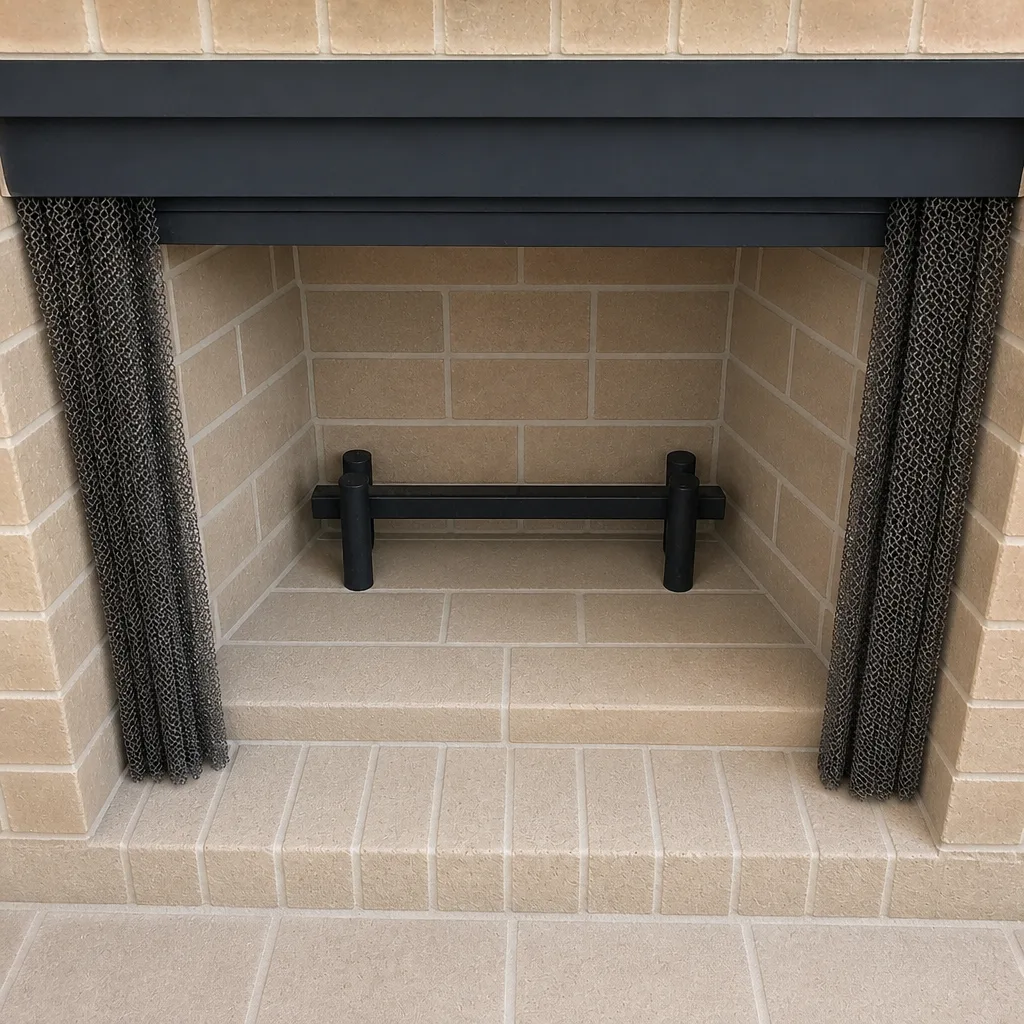
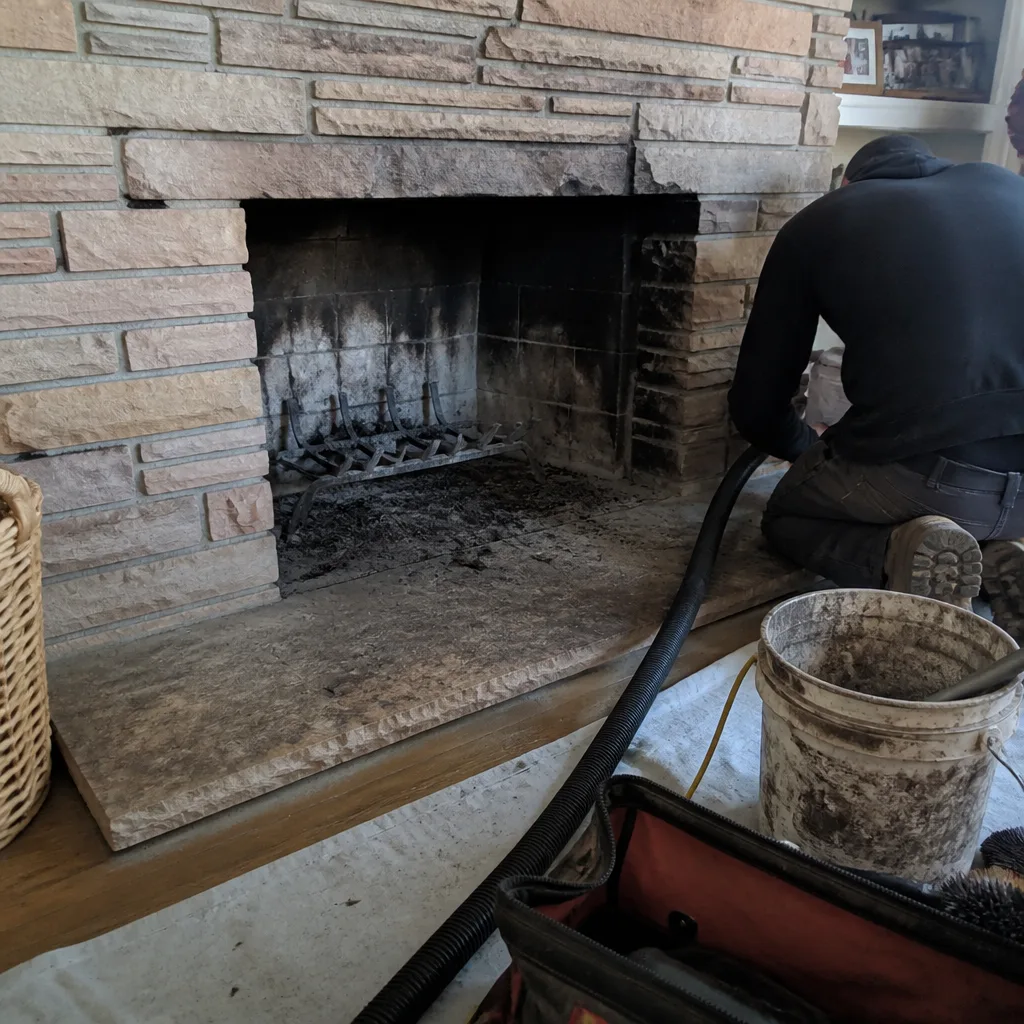
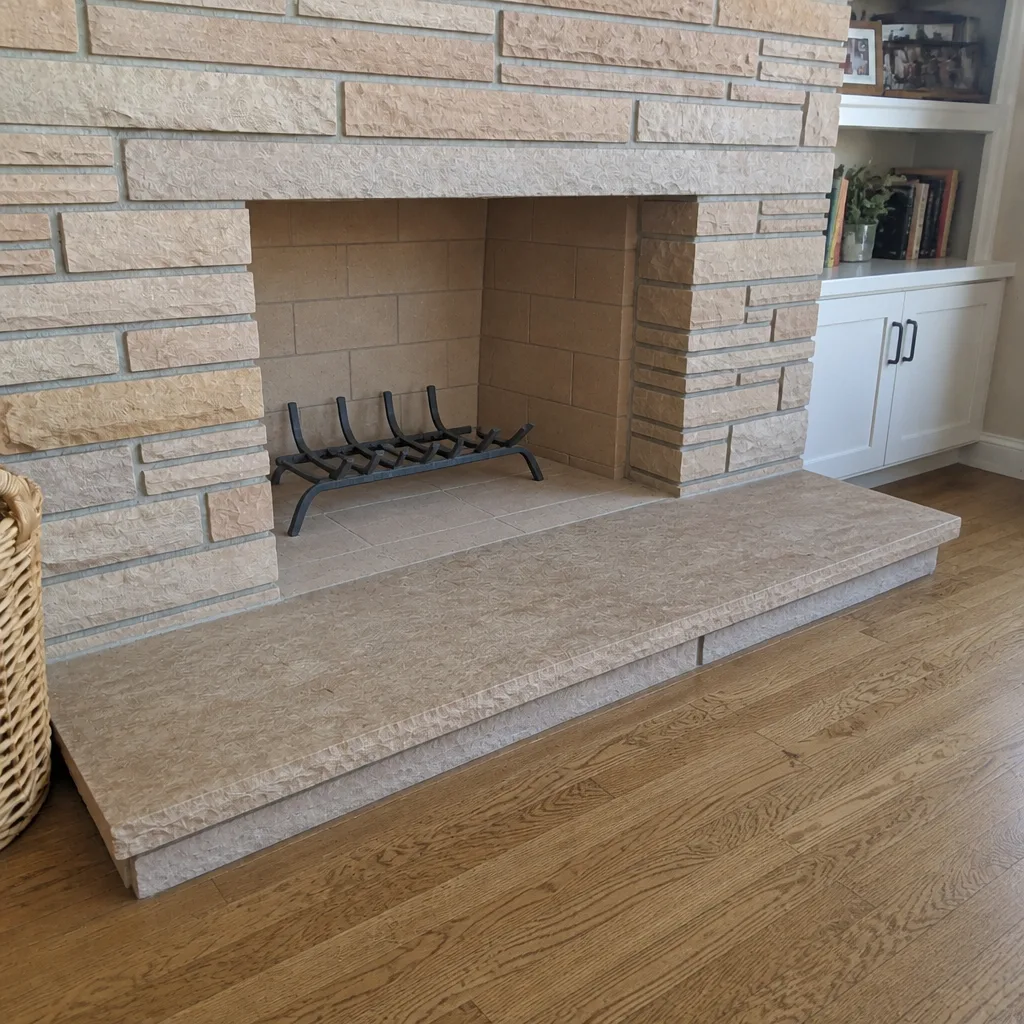
See the difference
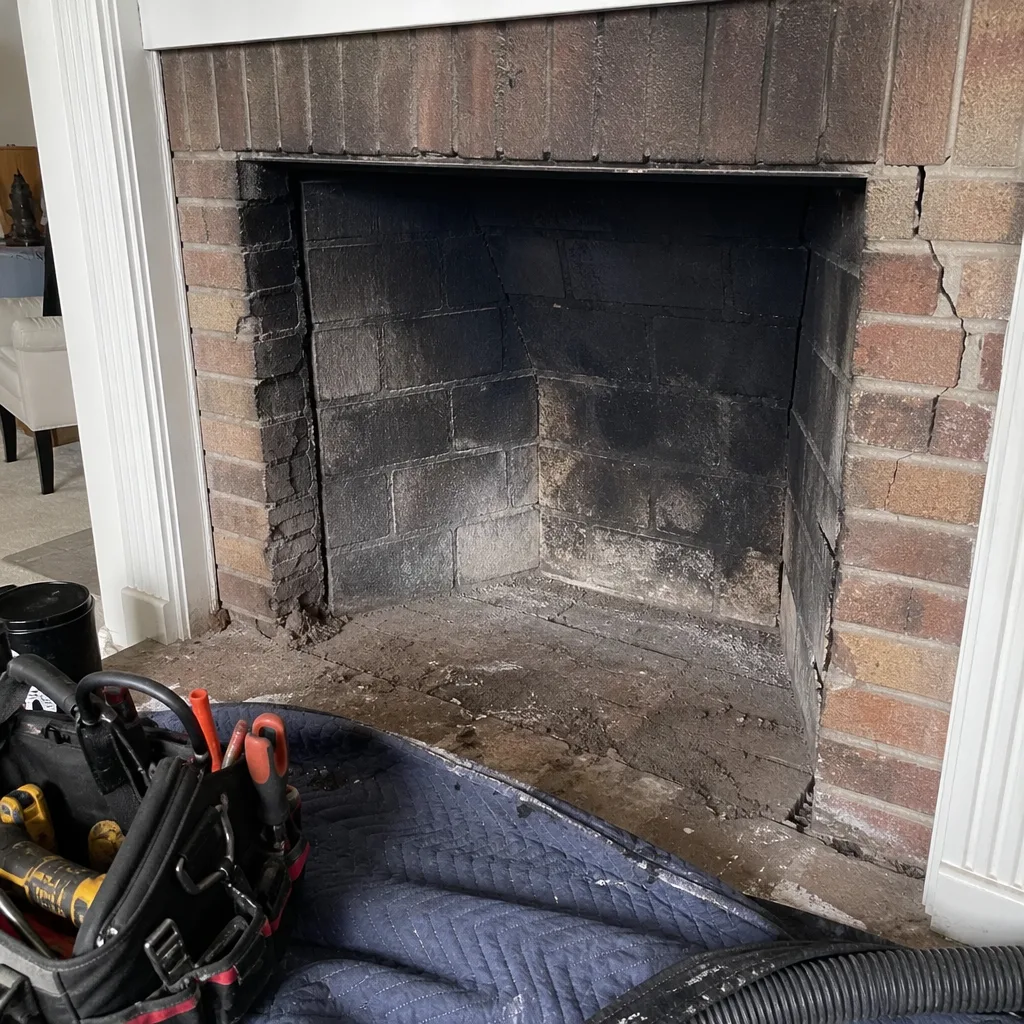 Before
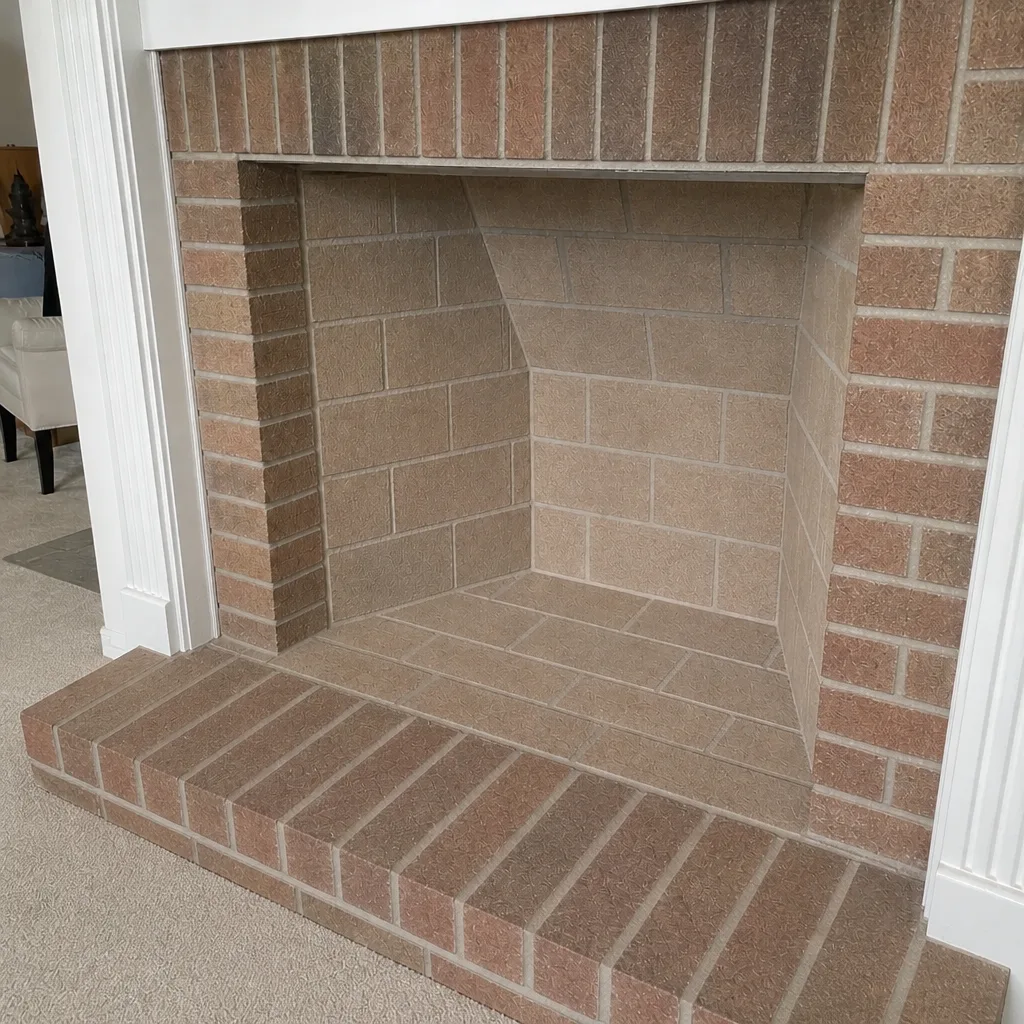 After
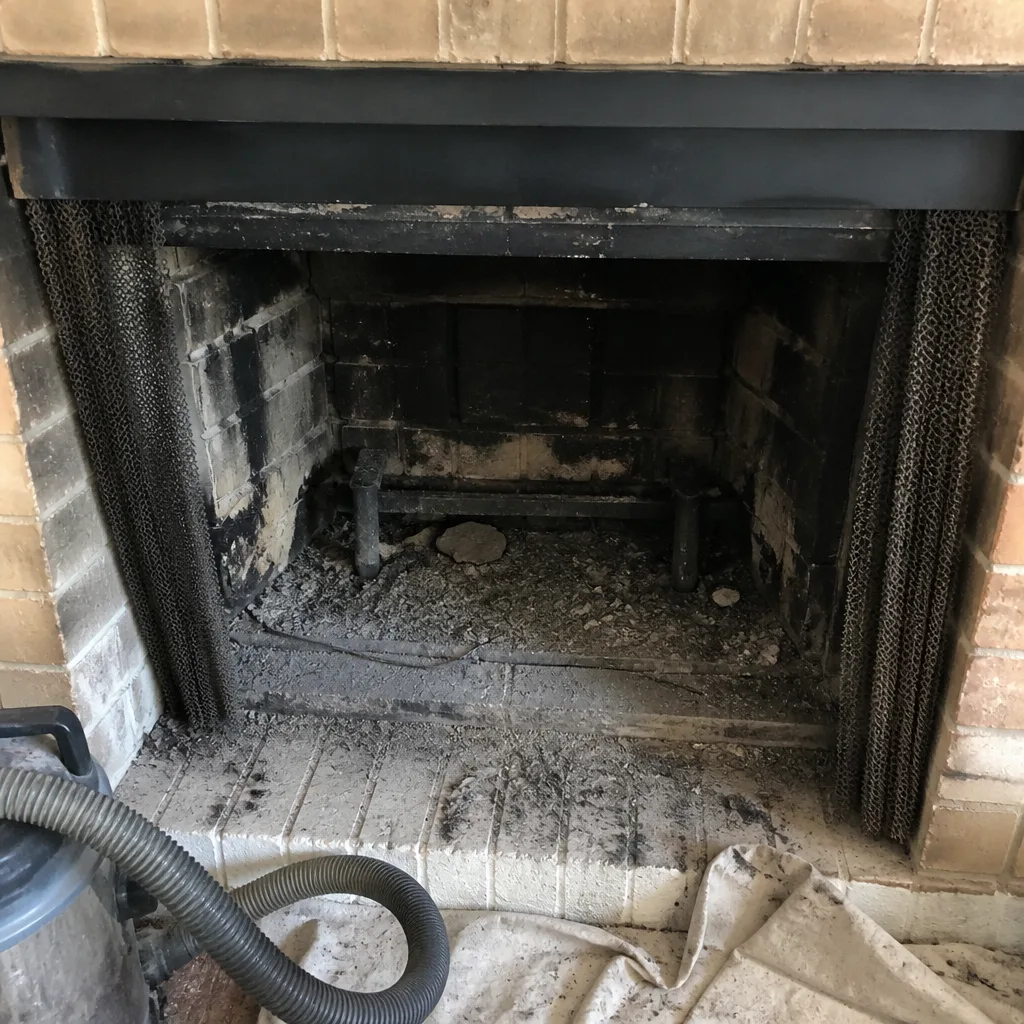 Before
 After
 Before
 After
When to Call a Professional
Call a professional when the symptom involves smoke, gas, or a suspicion of a liner fault, and call sooner rather than later. Specifically: if your carbon monoxide alarm sounds or you smell gas near a gas log set, leave the house and call for help first. Beyond those, call when smoke won’t clear after the fire has been burning for a while, when you see rust or water staining inside the firebox, when the same problem has come back after a previous fix, or when you’re about to buy or sell a home in Aurora and need an inspection you can hand to an insurer. Don’t attempt to open the flue, inspect the liner, or repair the crown yourself. A deteriorated liner or a failing crown is a job for someone trained to work at height with the right materials. For those stuck on which service you actually need, a chimney sweep visit that includes a documented inspection will tell you whether the fix is cleaning, repair, or just a follow-up in a year. Morningstar Chimney Sweep offers free estimates in Aurora – call (855) 368-2029.
Frequently Asked Questions
A typical chimney sweep in the Aurora area generally runs on a per-job basis, set by a written estimate, and a more involved job like a camera inspection or a repair adds to that. We don’t quote a flat price sight unseen. Call (855) 368-2029 for an exact quote – estimates are free.
At least once a year if you burn wood regularly, and more often if you burn heavily or notice buildup. A sweep before the burning season is the practical rhythm. The inspection matters as much as the timing, so ask for both. Call (855) 368-2029 to book a sweep and inspection.
Only if the inspection shows a liner that can’t be brought back, and a deteriorated liner is a genuine safety concern, not an upsell. There are cases where resurfacing with a specialist product such as HeatShield restores a liner without a full replacement. Either way, ask to see the camera evidence before you decide.
The most serious risk is a chimney fire from creosote buildup, and the quieter risk is carbon monoxide leaking through a failed liner. Those are reasons to act. But not everything is urgent: a cap that needs replacing can usually be scheduled without alarm. A camera-based report tells you which is which. Call (855) 368-2029 for an honest assessment.
Because moisture is sitting in the flue with soot and creosote residue, and the warm air pulls that odor down into the house. It’s a sign the flue needs sweeping and possibly a cap or crown repair to keep water out. Aurora’s swing between cold and warm weather makes this a common spring pattern.
Yes. At roughly 5,400 feet, the air is thinner, so a fire needs more air volume and the chimney generates less of the stack effect that pulls smoke up. That doesn’t mean everything is broken, but it does mean a technician diagnosing draft problems in Aurora has to account for it. An inspection establishes the baseline.
The Bottom Line
Most Aurora chimney troubles are diagnosable. Match the symptom to the part: smoke rollout and weak draft are usually draft, blockage, or liner; water staining and odor are usually cap, crown, or flashing; a problem that keeps coming back is usually structural. Start with the symptom, ask for a camera-backed inspection and a written report, and request a clear line between urgent repairs and what can wait. Then, if a repair is recommended, ask what brand and method will be used. A chimney is a system with five or six failure points, and knowing which one you’re standing on is the whole game. Morningstar Chimney Sweep is a specialist for the full life cycle of the chimney: inspection, cleaning, and repair under one roof, with a clear account of what was found. For Aurora homeowners working through a problem, the shortest path is a conversation with someone who works this trade every day. Call (855) 368-2029. We answer 24/7. Fast dispatch from 7am to 7pm, Sunday through Friday. Estimates are free.
For the full range of what we handle, start with Morningstar Chimney Sweep. If your inspection turns up a repair, the next step is chimney repair, and if you’re planning ahead for the burning season, our Aurora service page covers how a visit is scheduled.
Written by the team at Morningstar Chimney Sweep.